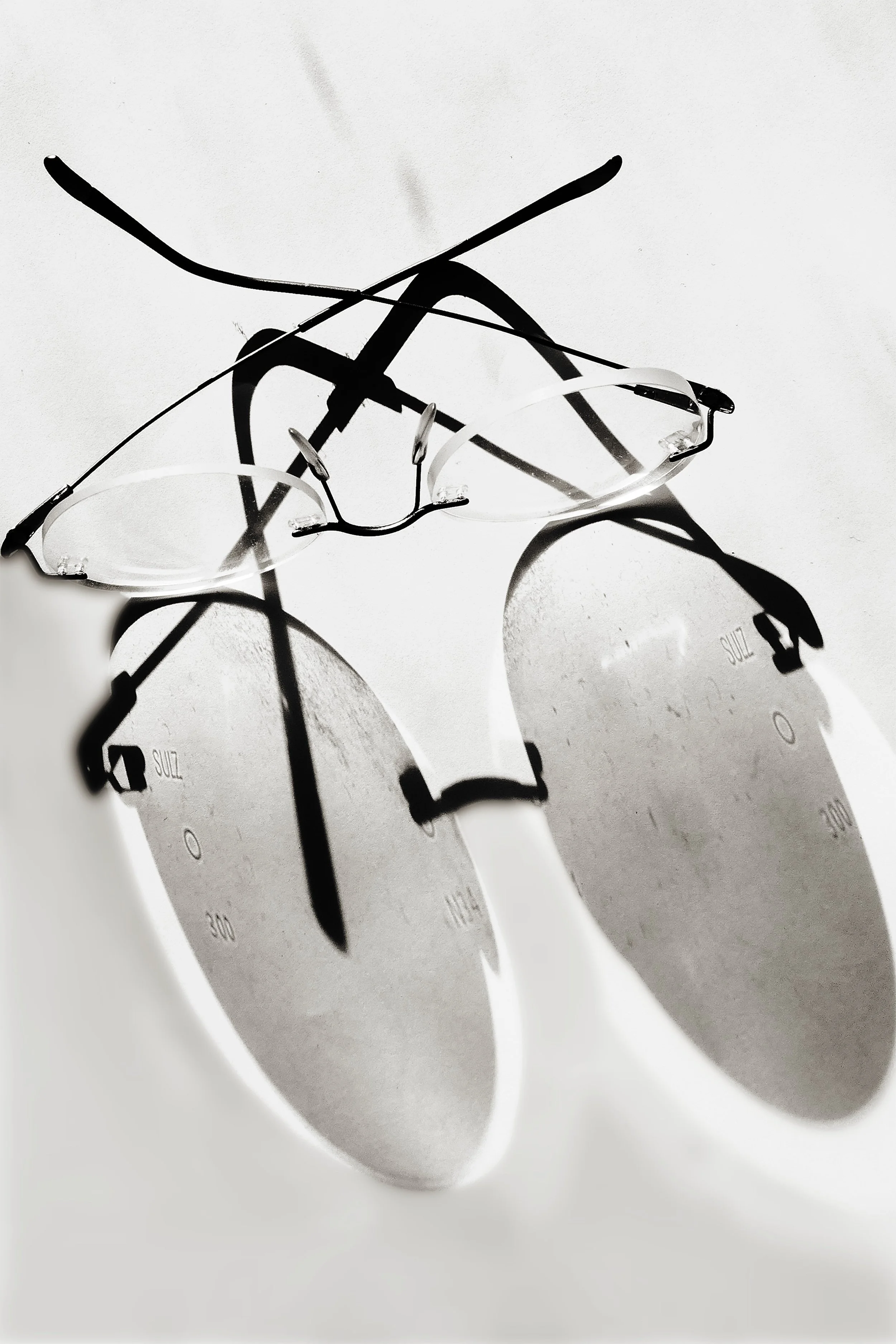
‘Being Able To See’
“As of this moment”, the eye surgeon told me, “your eyeglasses are officially useless!”
It’s not that I doubted him, but I’d been wearing glasses since I was in grade five, and by the time I’d turned 17 and applied for my driver’s license, they’d become such a part of me that I needed them to see well enough to drive. Also, this left eye cataract surgery had been more difficult than the first one, more painful, and I was feeling a tad shaken, tired and fragile. I just wanted to go home.
Three weeks previously, I was lying on my back in OR #7 with a nurse pleasantly chatting away while unfolding this placemat thing over my face with a hole in it so only my right eye showed through, and I heard the doctor’s voice as he entered the room, all chatty and confident and chuckling over some private joke as he prepped for my first surgery. I wasn’t scared, really ... perhaps a little nervous, although I’d managed to shove most of that clenched fear away into one of my subterranean man-drawers, so that by this time, with as much manly bravado as I could muster, I asked, “So, Doc … is this “little procedure” going to improve my photography?”
“Absolutely not!”, he declared. “After this, you’re going to see every flaw and mistake that you once thought were normal.”
________________________________________________
Then he went on to tell me how the great Impressionist painter, Claude Monet, was so blind from cataracts that he only had 10% vision when he began painting his famous ‘Water Lilies’ series and that had there been standard ophthalmology back then, the world might have never experienced such great art.
Then there was the story about the great, local octogenarian painter with whom he was acquainted who was in for eye surgery and who was encouraging him to come to a gallery exhibition of his work. It was imperative that the young eye surgeon set aside some of his busy time to visit the exhibition and see his paintings, and so Dr. ___ promised that he would. When the old artist returned for his check-up a few weeks later, he asked if the surgeon had been to the gallery show. “Yes,” replied the doctor, “I did attend the exhibit.”
“So, what did you buy?” questioned the painter. “Which painting of mine did you buy?”
“Well, actually, your work is pretty expensive,” he replied delicately, “and a bit beyond my means.” (This is an ophthalmologist!) “I didn’t buy anything.”
“Look,” said the painter, ”The fact is, I’m going to die soon, and now is the best time to buy one of my paintings, because soon they’re all going to double in price! I’m trying to do you a favour, here, son!”
Now, I don’t know if the surgeon or his two nurses have had an opportunity to visit this new photography website of mine to view my work, although I’m reasonably confident they can afford a print or two, but I do hope that someone will feel moved to buy one before I’m famous … while I’m still vertical and my photographs are still affordable.
And, by the way, the surgeon was right … I can see .every flaw and mistake in my previous work, but this is definitely going to improve my photography. Heck, I can see clearly all the way to the horizon now, and this is Saskatchewan.
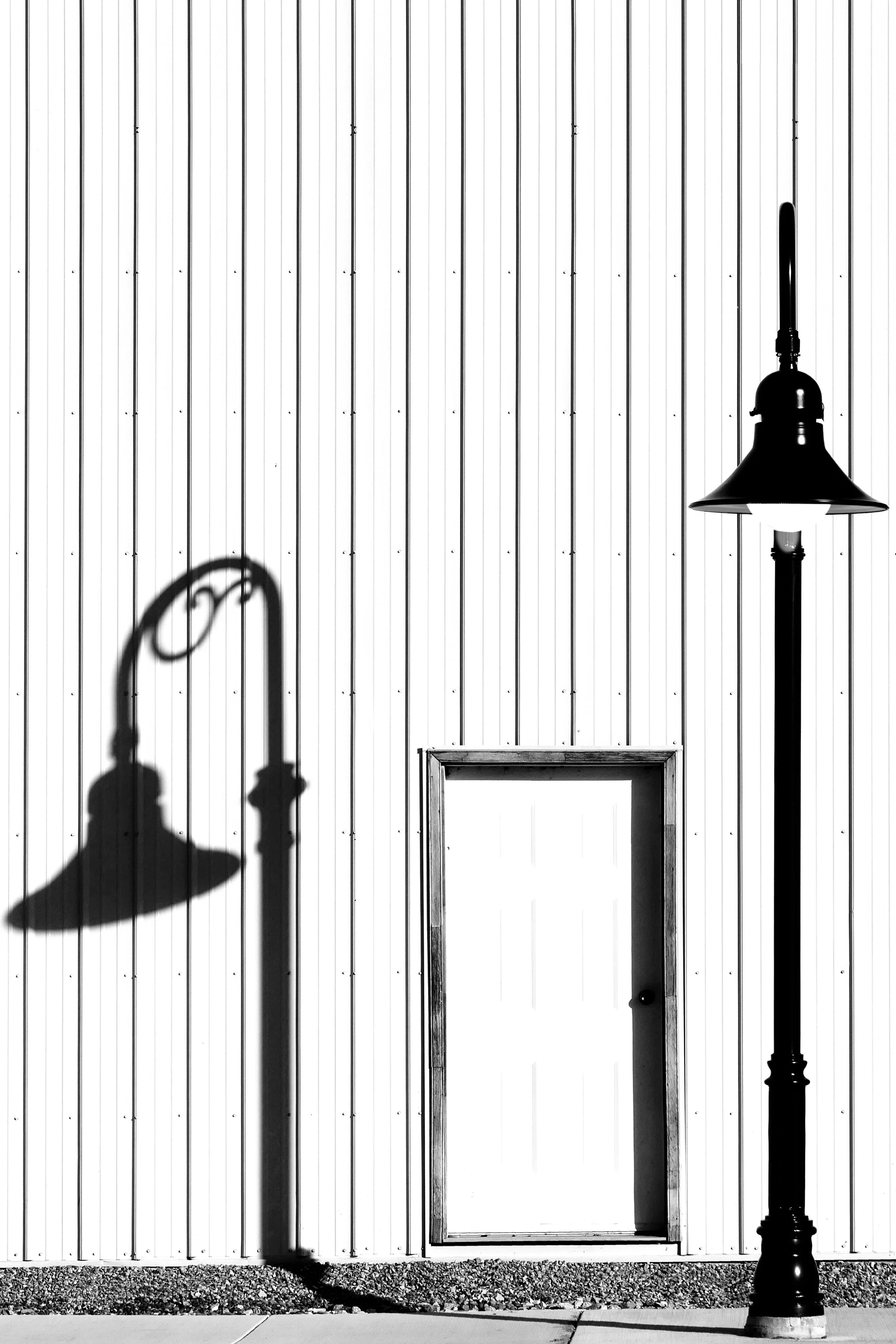
Black. White.
Shadows. Light.
Photographs like this one will probably show up again (eventually) in my Portfolio … in a new gallery entitled ‘Small Town Scenes’ or ‘Life In A Small Town’ or something similar.
Even the most mundane, every day street scene can take on a dramatically new visual impact when the the light is right. I have shot this decorative streetlamp in front of Bramble’s contracting shop on Saskatchewan Street a hundred times or more, always looking for a new expression, but this late afternoon sunlight and high contrast style of image works particularly well for me. Getting the geometry right can be tricky, but when you nail it, it’s very pleasing.
You’ll probably notice that much of my photography is influenced by Minimalism, the “less is more” approach, and I spend a considerable amount of time looking for ways and angles to reduce an image to its barest essentials. A friend once remarked that I seem to find beauty in the most ordinary of things, in places that most people would walk past without a glance. I like that, and I try to keep it in mind when I’m out walking with my camera.
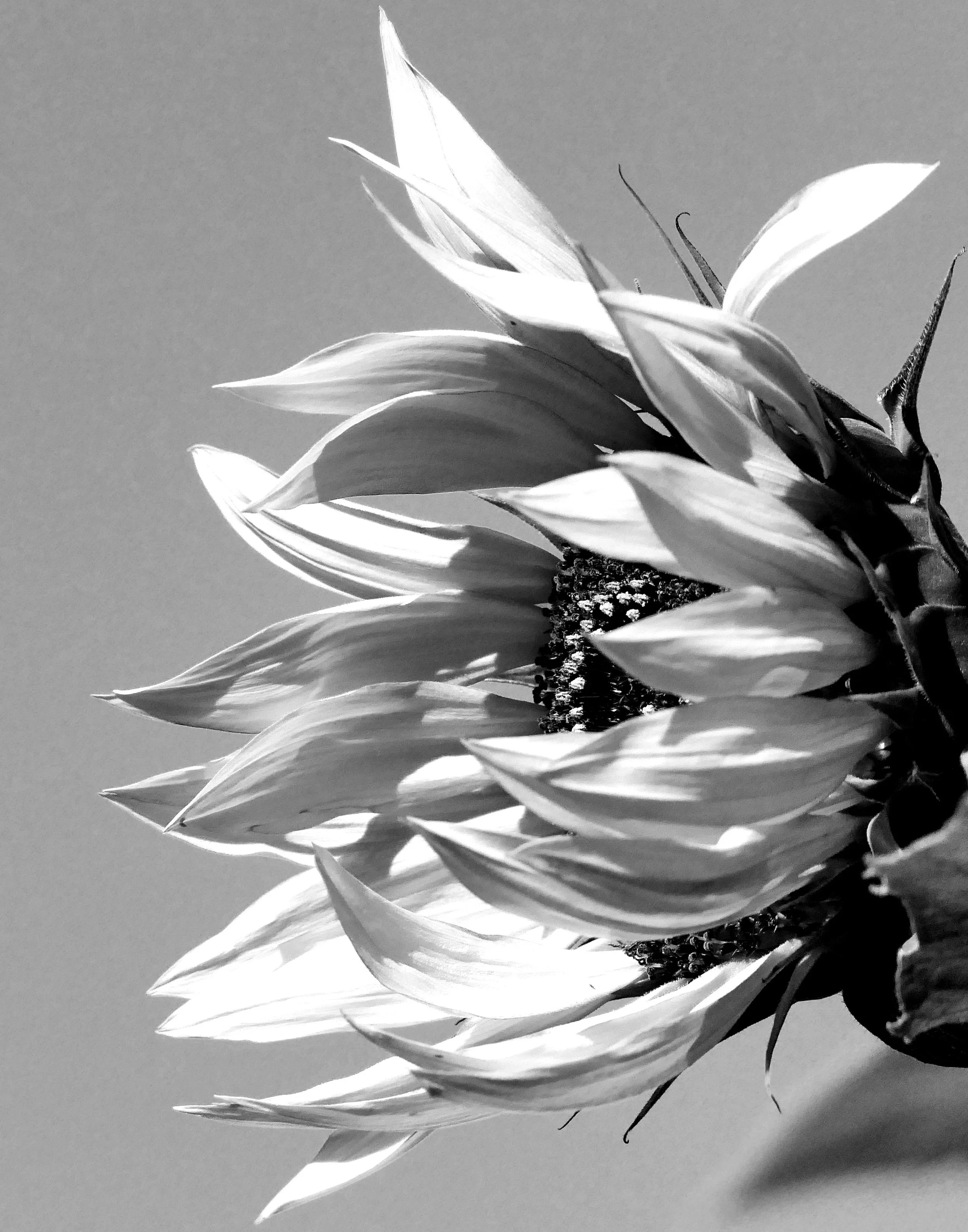
Monochromatic
It’s probably very obvious that I’m a big fan of colour. Bright, riotous, gorgeous colour. Flowers, birds, Fiesta Dinnerware, Blenko Glass, my ‘Shadows & Light’ photographs. I see everything around me, the whole world, in full colour, and I sometimes wish that my eyes could take in even more of the colour spectrum than they do.
But.
Some subjects just seem to benefit from being photographed in black & white, even flowers, and there’s a large segment of the photography community who believe that true photography is essentially, and only, black and white photography. To each, his own.
Several well-known photographers have had a profound effect on me and my work with florals … Robert Mapplethorpe, Masao Yamamoto and my Australian friend, Lyndall Gerlach come immediately to mind … and I have spent a lot of time emulating their styles and attempting to see things the way that they do or did.